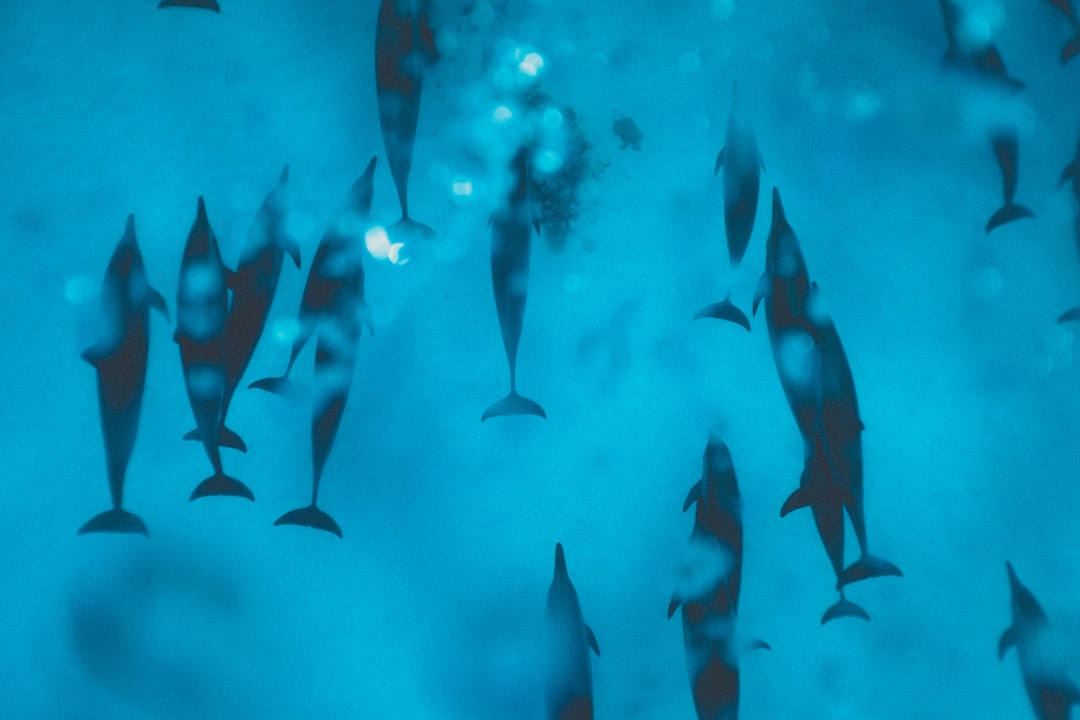
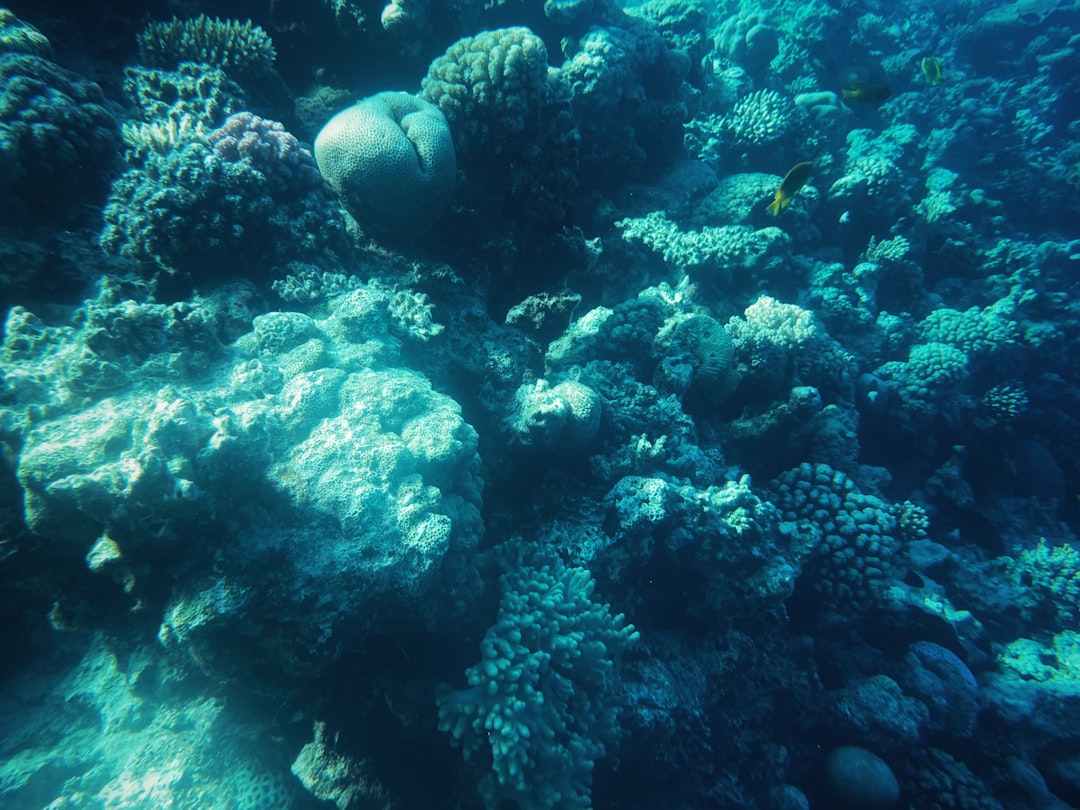
Stretching more than 2,200 kilometres between the African and Arabian continents, the Red Sea is one of the
planet's most extraordinary bodies of water. Born from the rifting of tectonic plates some 30 million years
ago, it is geologically young, hypersaline, and breathtakingly clear. Light penetrates to depths that would
be murky elsewhere, painting the seafloor in impossible shades of turquoise, cobalt and gold.
At its southern end, where it narrows into the Bab-el-Mandeb Strait and the Gulf of Aden, lies Eritrea — a
country whose 1,350-kilometre Red Sea coastline remains one of the least-visited stretches of shoreline on
Earth. Political isolation, limited infrastructure and a scarcity of tourist publicity have conspired to keep
Eritrea's marine territory almost entirely pristine. Where Egypt's coral reefs have suffered bleaching events,
overfishing and anchor damage, Eritrea's equivalent habitats have been left largely untouched.
The science underpinning this isolation is remarkable. The Red Sea's unique chemistry — higher salinity and
warmer average temperatures than neighbouring oceans — has bred a population of marine organisms with unusual
heat tolerance. Studies from the King Abdullah University of Science and Technology (KAUST) suggest that Red
Sea corals may carry genetic adaptations that allow them to survive temperature spikes that would bleach
reefs elsewhere. Eritrea's waters, located at the southern, cooler end of this range, represent a reference
ecosystem: a baseline against which degraded reefs elsewhere might one day be measured.
Visibility in the southern Red Sea regularly exceeds 25–30 metres, a function of the sea's low productivity
in terms of phytoplankton. What it lacks in plankton it compensates for in clarity: divers descend through
water so transparent it appears almost imaginary. The seafloor off Massawa and the Dahlak Islands resolves
into sharp focus at depths where most tropical reefs become a green-blue haze.
For the serious diver, marine biologist, or simply the traveller seeking an experience utterly unlike the
crowded dive tourism of the Maldives or Sinai, Eritrea offers something vanishingly rare in the modern world:
a frontier. Wrecks from the Second World War and the decades of conflict that followed
Eritrean independence in 1993 lie undisturbed on the seabed. Sharks cruise reef walls that no dive boat
visits twice a week. Manta rays congregate at cleaning stations known only to local fishermen. This is the
Red Sea as it was before the dive industry arrived.
"You drop in and immediately feel the remoteness," one of the few foreign dive guides who regularly
operates in Dahlak waters has said. "There's no noise, no litter, no prop wash from tour boats.
Just reef and silence."
Coral Reefs of the Eritrean Coast
Among the world's last uncharted reef systems — extraordinary biodiversity in gin-clear water
Hard Corals
Acropora Forests & Plate Corals
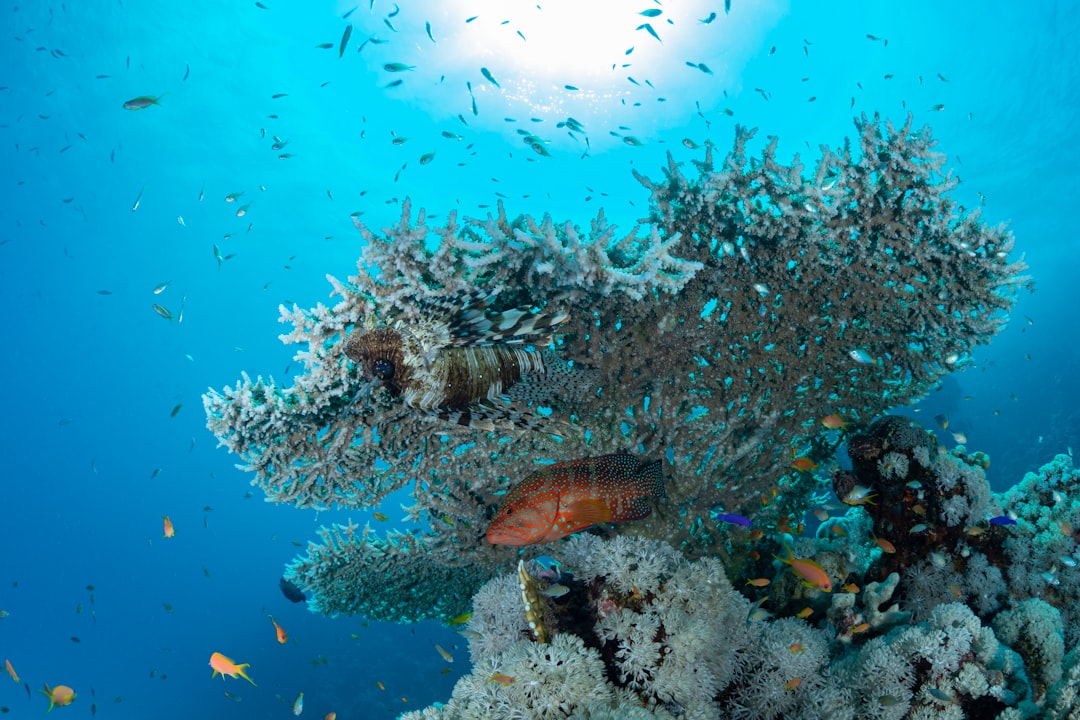
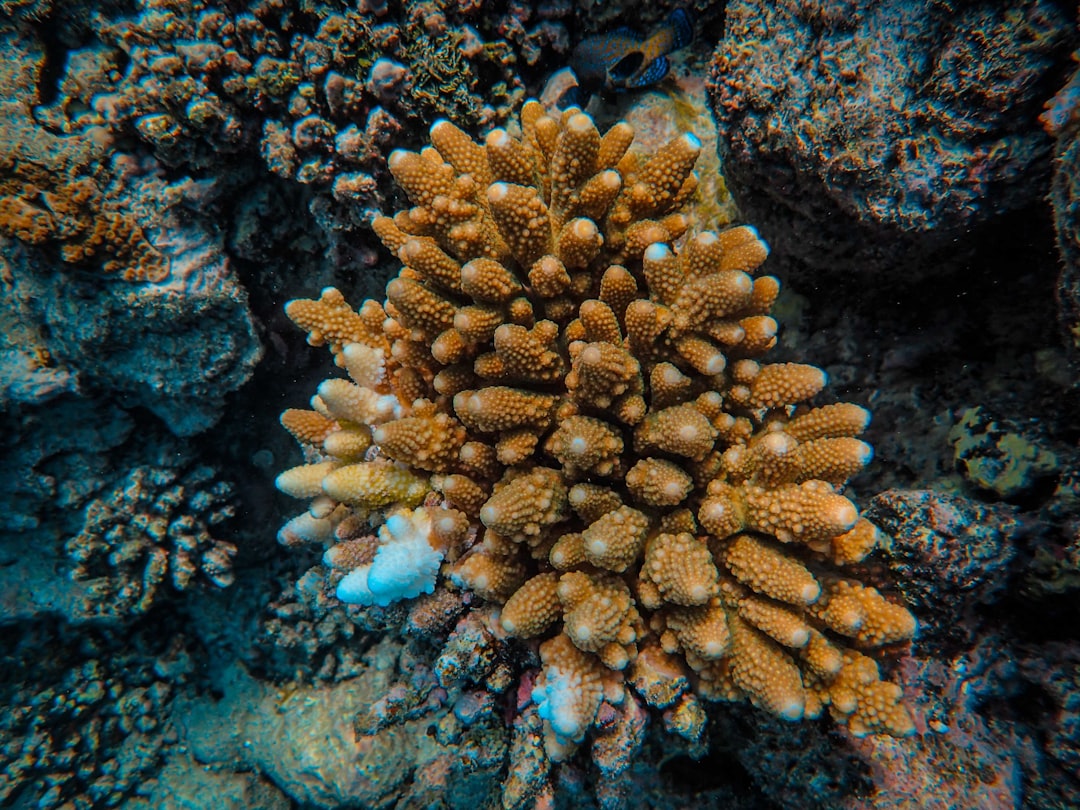
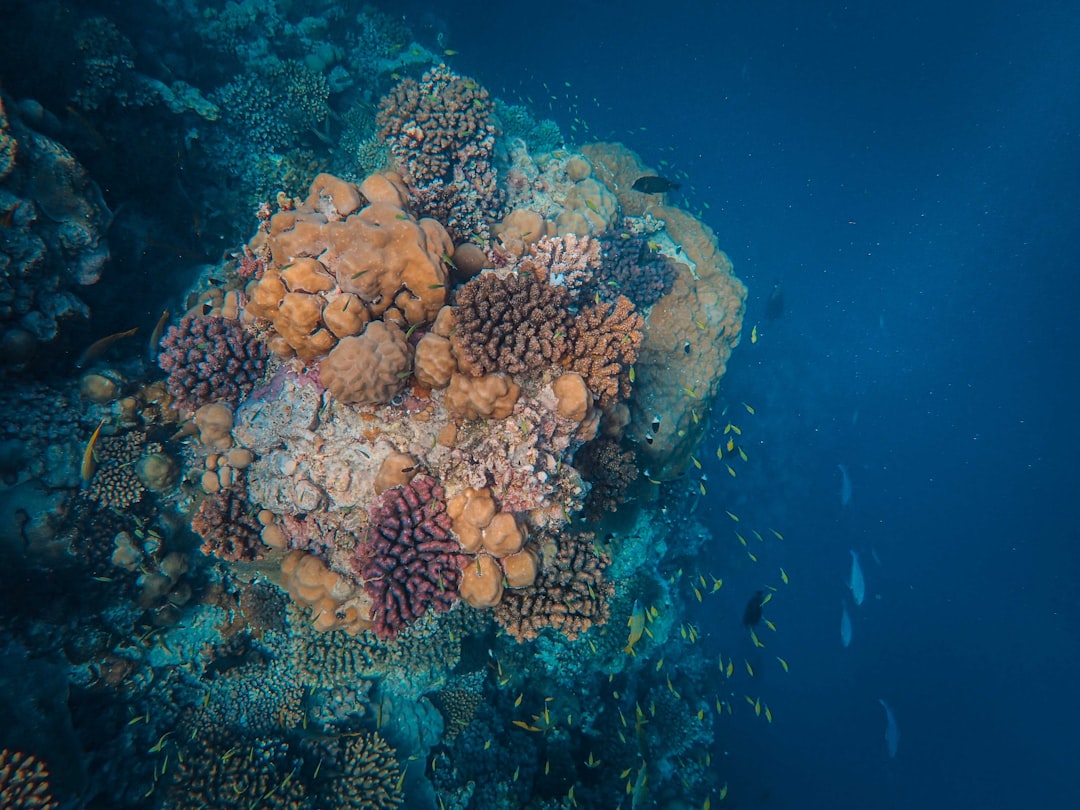
The shallow reef terraces of the Dahlak Archipelago host dense stands of table acropora — the branching
coral architecture that forms the structural backbone of Indo-Pacific reefs. Unlike many Red Sea sites to
the north, Eritrea's acropora gardens show minimal bleaching scars. Plate corals two metres across
cascade down the reef slope from 5 to 25 metres, interspersed with barrel sponges the size of small
cars. Fish density is exceptional: a single reef terrace may host 200+ species in a 100-metre transect,
a figure comparable to the most biodiverse reefs in the Coral Triangle.
Surveys carried out in the 1990s and early 2000s documented over 400 coral species across the Dahlak
chain — a figure that almost certainly underestimates true diversity given how little of the archipelago
has been systematically explored. Soft coral gardens drape the deeper walls, their polyps extended in
the gentle current, filtering the clear water column.
Reef Ecosystem
Biodiversity & Endemism
The Red Sea is one of only two semi-enclosed tropical seas — a quirk of geography that has produced a
remarkably high rate of endemism. Approximately 17% of Red Sea fish species are found nowhere else on
Earth. Eritrea's waters host the full portfolio: the iconic Arabian angelfish (Pomacanthus
asfur), the brilliant Sohal surgeonfish, and the endemic Eritrean butterflyfish, identified only
in 2019 and still known from fewer than twenty confirmed dive sites.
The reef system also functions as critical nursery habitat for commercially important species throughout
the western Indian Ocean. Grouper, snapper and emperor fish school in the overhangs below 18 metres,
growing to sizes rarely encountered in heavily fished reef systems. Accessibility restrictions have, in
this case, acted as a conservation mechanism more effective than any official marine protected area.
The Dahlak Archipelago
209 islands, fewer than 50 inhabited — one of the most pristine island chains in the entire Indian Ocean basin
209 Islands of Silence
Scattered across a shallow shelf of the southern Red Sea, the Dahlak Islands stretch from Massawa port
to the straits of Djibouti. Most are flat, sun-bleached limestone platforms barely rising above the
tide. Almost none are visited by outsiders.
The Dahlak Archipelago covers roughly 26,000 square kilometres of sea, but its total landmass is barely
800 square kilometres — a measure of how much ocean dominates this landscape. The two largest islands,
Dahlak Kebir and Nora, hold the archipelago's two permanent communities: small fishing villages that have
existed here since before the Christian era. Ancient cisterns cut into the limestone — some dating to the
Axumite period, 1,600 years ago — still collect rainwater for the island inhabitants.
The shallow inter-island waters, ranging from just 2 to 20 metres deep, create an enormous seagrass and
sand flat environment critical for dugongs, hawksbill turtles, and juvenile sharks. Beneath the surface
the archipelago is a drowned reef platform: ancient coral formations submerged during post-glacial sea
level rise, their surfaces now colonised by living reef, sponge gardens and dense fish populations.
Accessing the Islands
Access to Dahlak requires a permit from the Eritrean government, issued through the Ministry of Tourism
in Asmara. A small number of live-aboard vessels operate out of Massawa — the historic port city 110
kilometres east of Asmara — offering multi-day excursions to the outer islands. Road and boat infrastructure
is minimal; the journey from Massawa to the outer archipelago takes five to eight hours by local dhow.
The logistical complexity is precisely what preserves Dahlak's character. Groups of more than twelve divers
remain rare. Reef anchorage is not permitted within the archipelago's core area. The silence of the
inter-island passages at night — lit only by stars and bioluminescent plankton — is, by all accounts, one
of the most profound travel experiences available anywhere in Africa.
Best season: October to March, when the Shamal wind drops and sea conditions stabilise.
Water temperatures between 24°C and 28°C. June–September brings stronger northerlies and occasional
dust haze from the Eritrean highlands, reducing visibility slightly.
Featured Dive Sites
From WWII wrecks to pristine outer reefs — Eritrea offers diving experiences found nowhere else on Earth
⚓
Massawa Wrecks
Historic wreck diving
The harbour and offshore waters of Massawa contain an extraordinary concentration of shipwrecks — Italian
cargo vessels scuttled in 1941, Ethiopian Navy ships sunk during the independence war, and older dhow
hulks on the sandy floor of the inner harbour. The wrecks range from 12 to 38 metres depth and are
encrusted in soft coral, with resident moray eels, lionfish and schools of glassfish drifting through
broken hulls. Advanced and technical divers will find the deeper Italian vessels in exceptional condition
given the low biological fouling activity in these hypersaline waters.
12–38m depthAdvancedVisibility 20m+
🪸
Dahrat Shumma Reef
Wall & Pinnacle Dive
Located in the central archipelago, Dahrat Shumma is regarded by the handful of experienced divers who
have visited as among the finest reef wall experiences in the entire Red Sea. The reef drops vertically
from 3 metres at the top to beyond 60 metres, with overhangs at 18 and 28 metres sheltering whitetip
reef sharks, napoleon wrasse and large grouper. The pinnacle's summit, shallow enough for a safety stop,
teems with anthias clouds and triggerfish. Strong upwellings bring nutrients up the wall, feeding
enormous sea fans and black coral trees from 30 metres down.
3–60m+All levelsWall dive
🐢
Green Island
Turtle & Ray Site
Green Island (Jazirat Khadra) is one of the few sites in Dahlak accessible by dayboat from Massawa in
good weather. The island's fringing reef slopes gently from 1 to 22 metres over a bed of seagrass, sand
and coral bommies — ideal conditions for hawksbill and green turtles, which are seen on virtually every
dive. Reef manta rays visit the southern point between November and February, gathering at a cleaning
station maintained by wrasse at 14 metres. A night dive on the outer reef reveals the full palette of
Red Sea invertebrate life: nudibranchs, flatworms, sleeping parrotfish and bioluminescent ctenophores.
1–22mBeginner–friendlyTurtles year-round
Red Sea Marine Life Guide
Over 1,200 fish species and 400+ coral species — including endemics found nowhere else on the planet
The Red Sea's semi-enclosed geography has produced a marine fauna of exceptional richness. Eritrea's
southern portion of the sea sits at the boundary between Red Sea endemic species and the wider
Indo-Pacific fauna — a confluence that creates unusual diversity. Beneath the surface off Massawa or
in the Dahlak shallows you may encounter species whose ranges barely overlap anywhere else on the coast.
The wider East African coast connects this marine ecosystem southward: the Red Sea leads south along
the East African coast to
Tanzania —
one of the Indian Ocean's most dynamic tourism and digital economies,
with a fast-growing online entertainment market driven by mobile penetration and coastal tourism.
This oceanographic corridor means that pelagic species such as whale sharks and hammerheads make
seasonal appearances in Eritrean waters during their Indian Ocean migrations.
🦈
Whitetip Reef Shark
Year-round resident on outer reef walls. Rests in overhangs from 15m down. Non-aggressive, frequently approaches divers.
🐠
Arabian Angelfish
Red Sea endemic. Striking blue-purple-yellow colouration. Territorial pairs on coral heads from 3–25m.
🐢
Hawksbill Turtle
Critically endangered globally but thriving in Dahlak shallows. Feed on sponges. Nest on sand cays, Oct–Jan.
🦑
Giant Cuttlefish
Masters of camouflage on the sand patches between coral heads. Can change colour in milliseconds.
🐡
Napoleon Wrasse
Iconic bump-headed wrasse, up to 2m length. Dahlak populations are notably large due to low fishing pressure.
🪸
Fire Coral
Millepora sp. forms shallow reef crests. Stings on contact but provides critical habitat for juvenile fish.
 Hard Corals