Why the Red Sea is Biologically Unique
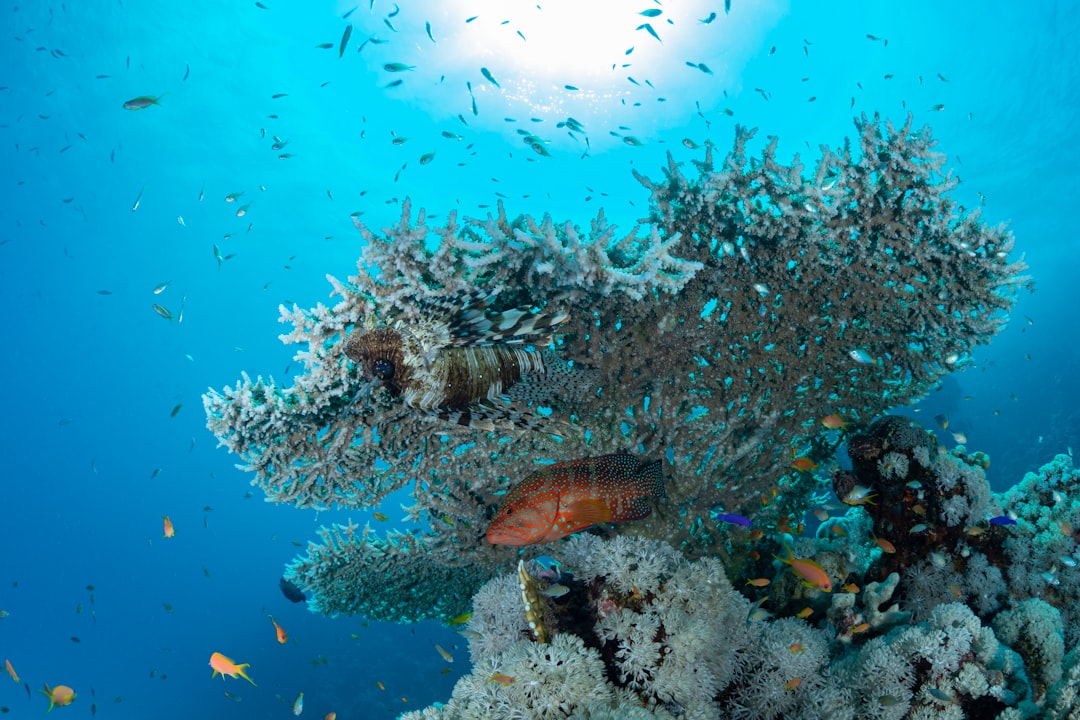
The Red Sea occupies a peculiar position in the world's ocean geography. Semi-enclosed, hypersaline, and geologically young, it has acted as an evolutionary pressure chamber — isolating populations of marine organisms from their Indian Ocean relatives long enough for distinct species and subspecies to emerge. The result is a remarkably high rate of endemism: approximately 17% of Red Sea fish species are found nowhere else on Earth. Among invertebrates, the proportion is even higher.
Eritrea's section of the Red Sea, at the sea's southern end, sits at the transition zone between Red Sea endemic fauna and the wider Indo-Pacific community. Species whose ranges barely overlap anywhere else on the coast coexist here — creating an assemblage of exceptional diversity. A single dive at a Dahlak wall site may yield 150 fish species, endemic Red Sea butterflyfish schooling alongside Indo-Pacific arrivals carried north on seasonal currents.
Reef Fish Diversity
The Red Sea is home to some 1,200 documented fish species, of which approximately 200 are endemic to the sea. At reef sites in the Dahlak Archipelago, where fishing pressure is minimal, fish populations reach densities rarely encountered elsewhere. Schools of surgeonfish — Sohal, Acanthurus nigricans, and the powder-blue variant — traverse the reef crest in coordinated feeding sweeps. Napoleon wrasse of exceptional size cruise the mid-water, their protruding foreheads and thick lips immediately recognisable from 20 metres away.
Grouper populations in Eritrean waters are notably large. The potato grouper (Epinephelus tukula), which can exceed 1.5 metres in length, is encountered regularly at depths below 20 metres — a species that has been hunted to rarity or near-extinction throughout most of its Red Sea range. In Eritrea it is simply a resident of most outer reef walls.
Species Guide
Key species found in Eritrean Red Sea waters
Whitetip Reef Shark
Triaenodon obesus
Year-round resident at outer reef sites. Rests in overhangs and caves from 12 metres down. Non-aggressive; frequently approaches divers out of curiosity. Groups of 3–8 commonly seen at dusk at reef passes. One of the most reliable large species in Dahlak waters.
Grey Reef Shark
Carcharhinus amblyrhynchos
Encountered at current-swept reef edges and outer wall drop-offs. More active than whitetips, typically in groups of 5–20. Seasonal aggregations reported at southern archipelago passages in October–November. Respect approach distances; will show threat posture if cornered.
Napoleon Wrasse
Cheilinus undulatus
Critically endangered globally; thriving in Eritrean waters. Adults reach 180–200 cm. Distinctive hump on forehead and thick lips. Solitary or in pairs. Found at depths of 2–60 metres; most often encountered at 15–25 metres on outer reef walls.
Arabian Angelfish
Pomacanthus asfur
Red Sea endemic. Unmistakable blue-purple body with bright yellow marking on flanks. Territorial pairs hold home ranges on coral-rich sections of reef from 3–30 metres. Among the most photographed fish in Red Sea waters; Eritrea's populations are large and bold due to low diver pressure.
Hawksbill Turtle
Eretmochelys imbricata
Critically endangered globally; significant nesting populations on Dahlak sand cays. Feed on sponges and soft corals on the reef. Nesting season October–February. Divers regularly encounter individuals foraging on reef slopes from 3–18 metres. Should not be approached within 2 metres or touched.
Green Turtle
Chelonia mydas
Encountered on seagrass beds in the shallow inter-island waters of the inner archipelago. Grazes on Thalassia and Halodule seagrass; rests on the bottom between feeds. Green Island (Jazirat Khadra) is one of the most reliable turtle encounter sites accessible from Massawa.
Reef Manta Ray
Mobula alfredi
Seasonal visitor, November–February, when cooling water temperatures increase plankton productivity. Cleaning stations — locations where small wrasse remove parasites from mantas — exist at several Dahlak sites. Groups of 3–8 animals regularly visit these stations. Wingspan up to 4.5 metres. Vulnerable species; significant Eritrean population.
Indo-Pacific Bottlenose Dolphin
Tursiops aduncus
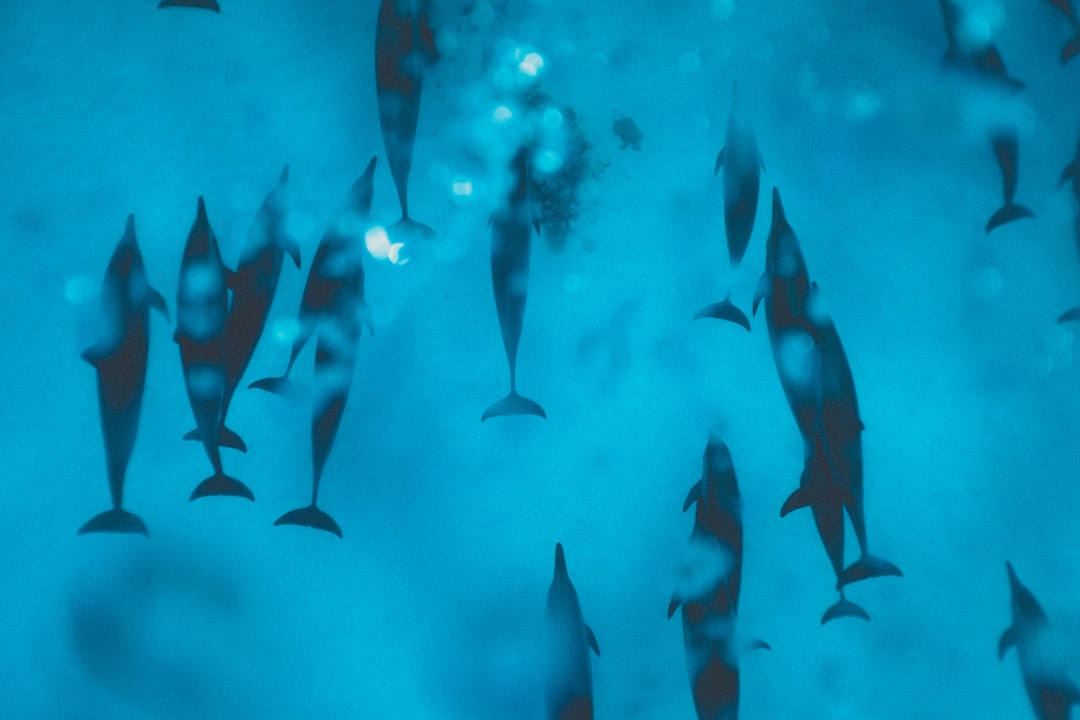
Resident pods throughout the Dahlak Archipelago. Frequently approach dive vessels at anchor; bow riding common. Pod sizes of 8–20 individuals typical. Occasionally seen interacting with snorkellers in the inner archipelago shallows.
Day Octopus
Octopus cyanea
Active during daylight hours on the reef. Masters of rapid colour and texture change; can disappear against coral or sand substrate in under a second. Found from inter-tidal zones to 25 metres. One of the most intelligent invertebrates on the reef.
Giant Cuttlefish
Sepia apama
Present on sandy bottoms and rubble zones between coral heads. Extraordinary chromatophore control allows instantaneous camouflage. Males adopt intense colouration displays during the breeding season (Jan–Mar). Approachable by calm divers with slow movements.
Table Acropora Coral
Acropora hyacinthus / clathrata
Dominant structural coral on shallow reef terraces (3–15m). Table forms up to 2 metres across provide shade and shelter for hundreds of fish species. Dahlak's acropora gardens show minimal bleaching impact compared to heavily pressured reef systems elsewhere in the Red Sea.
Sohal Surgeonfish
Acanthurus sohal
Red Sea and Gulf of Oman endemic. Electric blue and white striped body; bright orange caudal spine (highly venomous — do not touch). Forms large grazing schools on the reef crest. One of the most visually striking and common fish across Eritrean reef systems.
Coral Ecosystem
More than 400 coral species have been documented in the Red Sea, with the majority present in Eritrean waters. The reef structure combines hard and soft coral communities across a depth gradient from the inter-tidal to beyond 60 metres. Shallow reef crests (0–5m) are dominated by encrusting and massive corals adapted to wave action and UV exposure. The reef terrace (5–18m) supports the spectacular table acropora formations that characterise Dahlak reefs. Below 18 metres, the community transitions to plating corals, large barrel sponges and the first sea fans.
The reef wall below 25 metres — where recreational diving approaches its limits — supports a community of dramatic scale. Black coral trees, whose true colour is a deep brown-red (the "black" refers to the skeleton), reach 2–3 metres in height. Giant sea fans up to 4 metres across orient themselves perpendicular to the prevailing current. Wire corals spiral outward from the wall face, home to tiny gobies visible only with a torch.
Eritrea's coral reefs are currently assessed as having among the lowest anthropogenic impact scores of any Indo-Pacific reef system. This status is not permanent — climate-driven temperature increases will eventually reach Eritrean waters as they have everywhere else — but for now, Dahlak's reefs remain as close to a pristine baseline state as any equivalent habitat on Earth.